
Bail Bondsman vs. Bounty Hunter: What’s the Real Difference in Texas?
When someone is arrested in Texas, two roles come up that are often confused with each other: the bail bondsman and the bounty hunter. Both exist within the bail system, but they serve very different purposes. Understanding the difference matters, whether you are trying to post bail for a loved one or wondering what happens if something goes wrong.
What Does a Bail Bondsman Do?
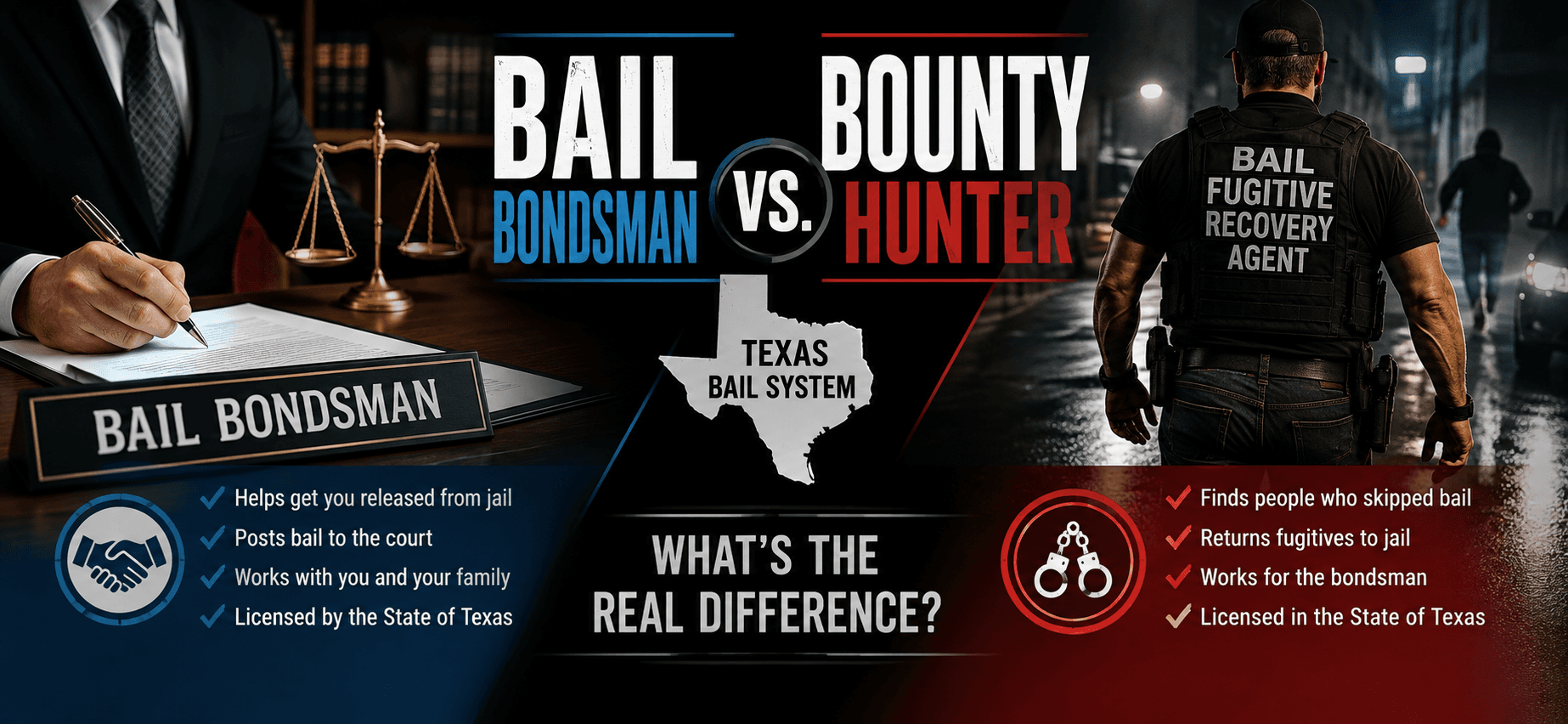
A bail bondsman, also called a bail bond agent, helps defendants get released from jail before their trial. When a judge sets bail, the family can pay the full cash amount directly to the court, or work with a licensed bail bondsman. The bondsman posts a surety bond on behalf of the defendant, guaranteeing they will appear at all required hearings. In exchange, the family pays a premium, typically 10 percent of the total bail amount in Texas. This premium is non-refundable.
The bondsman takes on financial risk. If the defendant fails to appear in court, the bondsman is responsible for paying the full bail amount to the court.
Who Can Be a Bail Bondsman in Texas?
In Texas, bail bondsmen are licensed through the Texas Department of Insurance. Agents must meet education, testing, and background requirements to operate legally. Working with a licensed agent protects you and ensures the process follows state regulations.
What Does a Bounty Hunter Do?
A bounty hunter, legally referred to as a bail fugitive recovery agent in Texas, finds and returns defendants who have skipped bail. When a defendant fails to appear, the bondsman faces financial loss. Bounty hunters are hired to track down fugitives and return them to custody, typically earning a percentage of the bond amount.
Are Bounty Hunters Regulated in Texas?
Yes. Texas regulates bail fugitive recovery agents under the Texas Occupations Code. Agents must be licensed, follow specific rules, and carry proper identification. They are not law enforcement officers and their authority is narrowly defined.
Key Differences Between Bail Bondsman and Bounty Hunter
- ▪Purpose: A bail bondsman helps secure release before trial. A bounty hunter tracks down defendants who fail to appear.
- ▪When they get involved: The bondsman is your first call after an arrest. The bounty hunter only enters the picture if someone skips bail.
- ▪Who they work for: The bondsman works with families and the court. The bounty hunter works for the bondsman who posted the bond.
- ▪Your interaction: As a family member posting bail, you will deal almost exclusively with the bondsman. If your loved one attends all court dates, you will never interact with a bounty hunter.
Why This Distinction Matters for Families
Your relationship is with the bail bondsman. The bondsman walks you through the paperwork, explains conditions of release, and ensures your loved one is released as quickly as possible. The bounty hunter only becomes relevant if the defendant fails to show up to court. The best way to avoid that situation is to make sure your loved one understands their court obligations and communicates openly with the bondsman if any issues arise.
At Elliott’s Bail Bond, we explain the conditions of every bond we write. Learn more about how the bail process works in Texas.
Frequently Asked Questions
Can a bounty hunter enter my home in Texas?
Bail fugitive recovery agents in Texas operate under specific legal guidelines. They do not have the same authority as law enforcement officers. If you have questions about a specific situation, consult a licensed attorney familiar with Texas law.
What happens if my loved one misses their court date?
The court issues a bench warrant and the bail bond faces forfeiture. The bondsman has a set period to locate and return the defendant before being required to pay the full bond amount to the court. Contact your bondsman immediately if a court date is missed.
Does a bail bondsman get my 10 percent back if charges are dropped?
No. The 10 percent premium paid to the bondsman is a fee for services rendered. It is non-refundable regardless of the outcome of the case. This is standard across Texas and is set by state regulation.
Do I need a bounty hunter to find someone who skipped bail?
If your loved one was released on a bond you co-signed and they skip bail, contact your bail bondsman immediately. The bondsman manages the process of locating the defendant, which may or may not involve a bail fugitive recovery agent.