
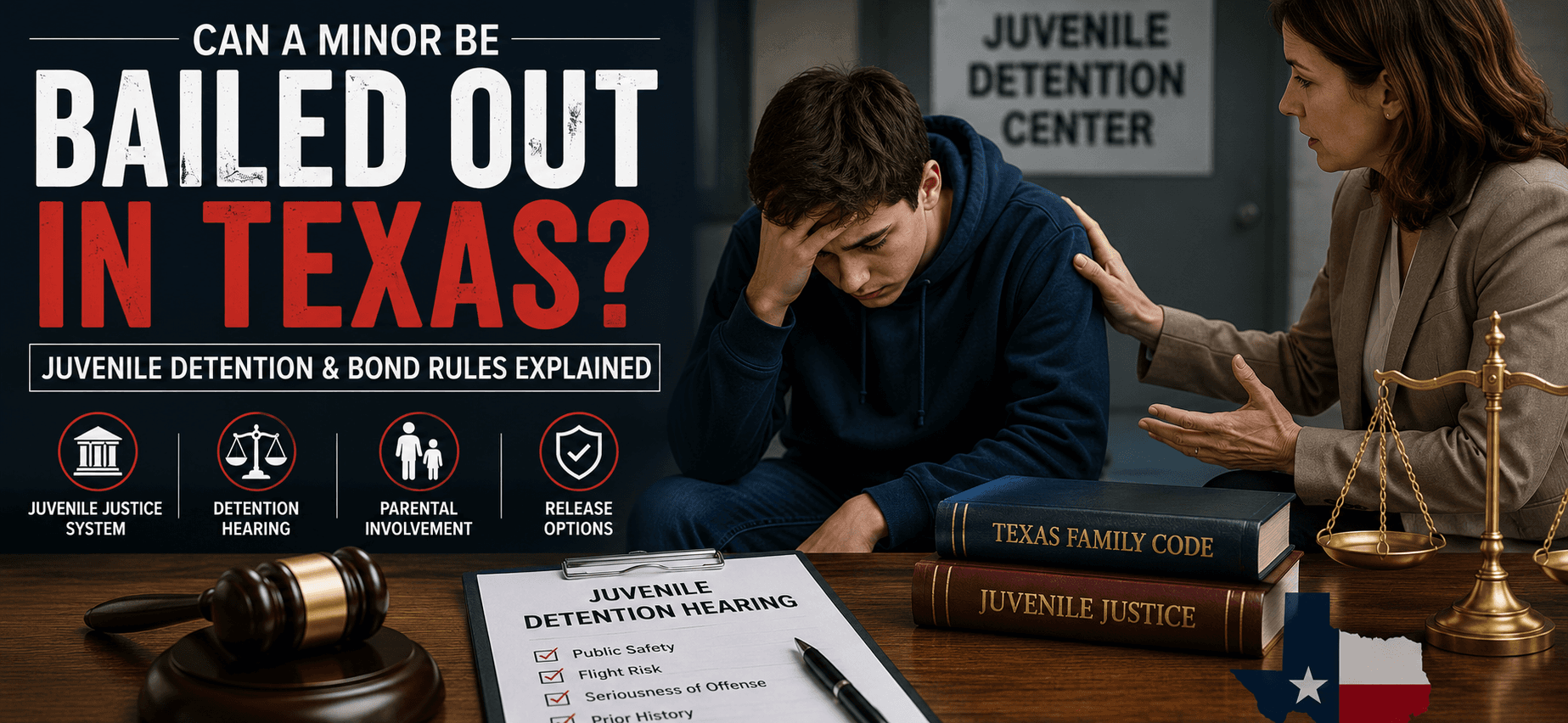
Can a Minor Be Bailed Out in Texas? Juvenile Detention and Bond Rules Explained
Finding out that your child has been arrested is one of the most frightening things a parent can face. The juvenile justice system in Texas operates very differently from the adult system, and understanding those differences is critical when time matters.
How the Texas Juvenile Justice System Works
In Texas, anyone under the age of 17 is generally treated as a juvenile under the law. Juveniles who are arrested are not processed through the same system as adults. Instead, they enter the juvenile justice system, governed by the Texas Family Code rather than the Texas Code of Criminal Procedure.
What Happens After a Juvenile Is Taken Into Custody?
When a minor is taken into custody, law enforcement may release the juvenile to a parent at the scene, take them to a designated juvenile processing office, or place them in a juvenile detention facility. A juvenile probation officer typically becomes involved early and makes an initial recommendation about whether the juvenile should be detained or released.
Is There Bail for Juveniles in Texas?
Traditional cash bail does not apply to juveniles in the same way it does to adults. The juvenile system uses a detention hearing process instead. Within 24 to 48 hours of a juvenile being placed in detention (not counting weekends or holidays), a judge must hold a detention hearing to determine whether continued detention is justified.
At that hearing, the judge considers:
- ▪Whether the juvenile is a danger to themselves or the public
- ▪Whether the juvenile is likely to appear for future hearings
- ▪The seriousness of the alleged offense
- ▪Whether the juvenile has prior contacts with the justice system
If continued detention is not warranted, the juvenile can be released to a parent, guardian, or other responsible adult.
When Is a Juvenile Tried as an Adult in Texas?
In cases involving serious offenses, a juvenile can be certified to stand trial as an adult. This is called a discretionary or mandatory transfer, depending on the offense, age, and history. When a juvenile is certified as an adult, the adult criminal system applies, including the possibility of traditional bail and bail bonds. If your child is facing a certification hearing, consult both a defense attorney and a bail bondsman to understand your options.
What Parents Should Do Right Away
- ▪Do not wait. Contact a juvenile defense attorney immediately. Time is critical.
- ▪Gather your information. Know the facility where your child is held, the alleged offense, and any prior juvenile history.
- ▪Attend the detention hearing. Your presence and willingness to supervise your child can influence a judge’s release decision.
- ▪Understand the release conditions. Juvenile release often comes with conditions such as curfews or check-ins with a probation officer.
When a Bail Bondsman Can Still Help
If your child is 17 or older and has been charged as an adult, traditional bail applies and a bail bondsman can help secure their release. At Elliott’s Bail Bond, we work with families in exactly these situations. Learn more about the bail process in Texas and how we can help your family navigate a difficult moment.
Frequently Asked Questions
Can I pay a bail bondsman to get my child out of juvenile detention in Texas?
In most juvenile cases, traditional bail bonds are not used. Release is determined by a judge at a detention hearing. However, if your child is being tried as an adult, a bail bondsman can help post bond just as in any adult criminal case.
How long can a juvenile be held in detention before a hearing in Texas?
Texas law generally requires a detention hearing within two business days of a juvenile being placed in a detention facility. Weekends and holidays may extend this window slightly depending on the jurisdiction.
What is the difference between juvenile probation and adult probation in Texas?
Juvenile probation is supervised by county juvenile probation departments and is oriented toward rehabilitation. Adult probation is handled under different rules with different consequences for violations.
At what age does a minor become subject to adult bail law in Texas?
Texas law treats individuals 17 and older as adults in the criminal justice system in most circumstances. However, the specific age and charge both matter. Some cases may still be handled through juvenile courts depending on judicial discretion and the nature of the offense.