
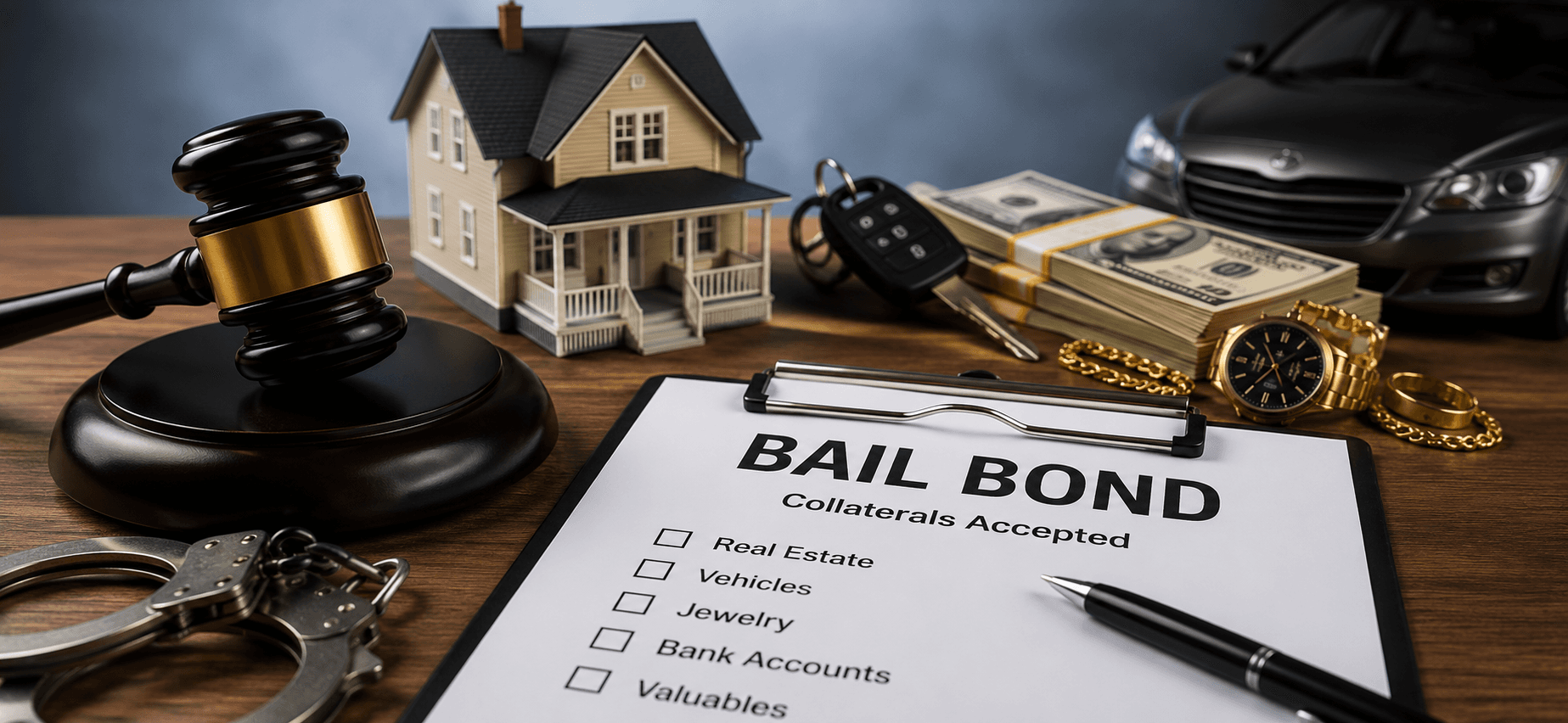
What Can Be Used as Collateral for a Bail Bond? A Complete Guide for Texas Families
When a loved one is arrested and bail is set high, many families in Montgomery County face a difficult reality: they do not have thousands of dollars in cash sitting in a bank account. Collateral is how most families bridge that gap. Understanding what qualifies, what the risks are, and when you can recover your property is essential before you sign anything.
What Is Collateral in a Bail Bond?
Collateral is an asset you pledge to the bail bondsman as security against the full bail amount. If the defendant skips court and the bond is forfeited, the bondsman has the legal right to claim the collateral to cover the loss. If the defendant makes all appearances and the case concludes, the collateral is returned, usually within a few weeks of case closure.
What Types of Property Are Accepted as Collateral?
Most licensed Texas bail bondsmen will accept a variety of assets, including:
- ▪Real estate: A home, land, or commercial property with sufficient equity is the most common form of collateral for high-bail cases. The property must have a clear title or have enough equity above any existing mortgage to cover the bail amount.
- ▪Vehicles: Cars, trucks, motorcycles, boats, and RVs can serve as collateral if they are paid off or carry significant equity. The title must be in the name of the person pledging it.
- ▪Jewelry and valuables: High-value items like jewelry, watches, or collectibles may be accepted, though the bondsman will typically require an appraisal.
- ▪Bank accounts and savings: A co-signer can sometimes pledge a savings or investment account as security.
- ▪Electronics and equipment: Depending on the bondsman, certain high-value equipment may qualify.
What Happens to Collateral If the Defendant Fails to Appear?
This is the most important question families ask. If the defendant misses a court date, the court forfeits the bail bond. The bondsman then has a limited window, typically 180 days in Texas, to locate the defendant and return them to custody. If that effort fails, the bondsman can pursue and liquidate the pledged collateral to recover the forfeited amount. This is not a theoretical risk. It happens, and it destroys family finances.
Before pledging your home or vehicle, make absolutely sure the defendant understands their legal obligation. Contact us at (936) 494-4444 and we will walk you through exactly how the collateral arrangement works before you commit.
Are There Bail Bonds That Do Not Require Collateral?
Yes. For lower bail amounts or clients with a strong local history, some bondsmen will issue a bond on a signature basis only, sometimes called a personal recognizance bond or a signature bond. Elliott’s Bail Bond works with families across Conroe and Montgomery County to find arrangements that fit the situation without unnecessarily putting family assets at risk. Learn more about the different types of bonds available in Texas or review what bail means under Texas law.
Every situation is different. The bail amount, the charge, and the defendant’s history all shape what collateral, if any, is required. Contact us at (936) 494-4444 for a direct conversation about your family’s options today.
{
"@context": "https://schema.org",
"@type": "FAQPage",
"mainEntity": [
{
"@type": "Question",
"name": "Can I use my house as collateral for a bail bond in Texas?",
"acceptedAnswer": {
"@type": "Answer",
"text": "Yes. Real estate with sufficient equity is one of the most commonly accepted forms of bail bond collateral in Texas. The bondsman will require documentation of ownership and equity. If the defendant fails to appear, the property can be claimed to cover the forfeited bond amount."
}
},
{
"@type": "Question",
"name": "When do I get my collateral back after a bail bond?",
"acceptedAnswer": {
"@type": "Answer",
"text": "Collateral is returned once the court case is fully resolved and the bond is officially exonerated. This typically happens within a few weeks after the final court date, provided the defendant met all conditions and appearances."
}
},
{
"@type": "Question",
"name": "What happens to collateral if the defendant is found guilty?",
"acceptedAnswer": {
"@type": "Answer",
"text": "A guilty verdict does not affect your collateral, as long as the defendant appeared for all court dates. Collateral is only at risk if the defendant fails to appear in court, not based on the outcome of the case."
}
},
{
"@type": "Question",
"name": "Can someone else pledge collateral for my bail bond?",
"acceptedAnswer": {
"@type": "Answer",
"text": "Yes. A co-signer, often a family member, can pledge their own property as collateral on behalf of the defendant. The co-signer becomes legally responsible for ensuring the defendant appears at all required court dates."
}
}
]
}